
Forensic Engineering Reports
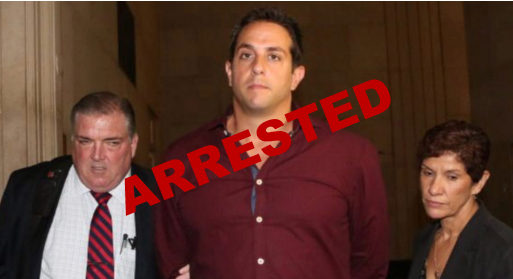
The engineering firm that includes the summary of conclusions shown below on their engineering reports and whose name will, for legal reasons, not be shown, once submitted the same Summary of Conclusions shown below on a Hurricane Sandy claim after conducting a re-inspection of a property where the previous (first) engineering company said that no damage was found. The second engineering firm submitted the same no damage found conclusion as the first engineering firm. The property owners then sued their P&C insurance company who relied on the false no damage found claim – and won the case, and the manager of the first engineering firm was arrested. Unfortunately, the second engineering firm who is well known across the country, was not held accountable.
ENGINEERING FIRM SUMMARY OF CONCLUSIONS
“This report is based on presently known and available facts, data, and information. To the extent that additional or different facts, data, or information is developed or discovered after issuance of this report, we reserve the right to amend, alter, or change the report as needed to reflect consideration of the additional or different facts, data, or information. We appreciate your confidence in our professional services.”
My response
“Dear Forensic Engineer,
You state in your engineer’s official report, in other words, your specific description of the then current state and condition of the property in question when investigated, as you referred to it, that you did, on xx/xx/xxxx, as a licensed forensic engineer employed by “ABC1 Forensic Engineering”, inspect, as part of an investigation of the property damage insurance claim numbered 123-456A, on behalf of “XYZ P&C” insurance company, opine in your Summary of Conclusions that, and contrary to and in opposition to the damage report of the insured customer’s professional contractor, the reported property damage to the insured’s property did not occur or exist.
You stated that your report which included your opinion based conclusion, was based on ‘presently known’, in other words – currently apprehended with certainty and fully understood and grasped, and ‘available’, in other words, readily accessible, ‘facts’, in other words, concepts whose truths can be proved, data, in other words, facts used for making decisions, and information, in other words, knowledge of facts about something. You also included in your report the following caveat; “To the extent that additional or different facts, data, or information is developed or discovered after issuance of this report, we reserve the right to amend, alter, or change the report as needed to reflect consideration of the additional or different facts, data, or information.”
According to your own words written in your report, your opinion based conclusion was founded on currently apprehended with certainty and fully understood and grasped, readily accessible concepts whose truths can be proved – in other words, facts. Yet, as the physical and photographic evidence have proven your opinion based ‘fact’ conclusion to be suspect, using what appears to be a sort of ‘get out of jail free’ card, you now attempt to rely on the caveat previously mentioned. You can’t have it both ways.
Commonsensically speaking, it is understood, as it applies in this case, that the words fact and opinion have different meanings. A fact is defined as; an actual occurrence or, a piece of information presented as having objective reality. Opinion is defined as; a personal belief or judgment that is not founded on proof or certainty. Objectively, per the definitions given, as it pertains to this case, an individual cannot credibly state both a fact and an opinion regarding a specific occurrence. One or the other has to fail, depending on the evidence presented in support of or against one or the other.
In this case, based upon the physical and photographic evidence given, your conclusion, which the insurance company relied on when denying payment of the insured’s claim, was not and is not, as the physical and photograph evidence has shown and proven, ‘a piece of information presented as having objective reality’. In other words, your conclusion is, at the very least, ambiguous and therefore as unsustainable as it is unreliable. As for the insured, the ambiguity should and will most likely weigh in favor of the insured which will result in the insured’s legitimate claim being properly paid, IMHO.”
________________________________________________________
Several years later, apparently feeling threatened by what my 3RSystems, LLC restoration contractor training program teaches, the same engineering firm whose conclusion shown above matched the first engineering firm’s errant conclusion in the Sandy case, thought it was a good idea to include 3RSystems, LLC in a presentation in front of a large group of P&C insurance industry representatives. During that presentation which the engineering firm foolishly released later on line, it was suggested that my contractor training program was less than honorable.
Upon seeing the presentation on line, several of my USA contractor customers who had previously completed my 3RSystems, LLC training, contacted me and shared their thoughts that the presentation was defamatory. Several years later, after having spent an estimated $500,000 in legal and related fees, the engineering firm’s “Summary of Conclusions” regarding my law suit against them was that it would be in their best interests to agree to a substantial out of court settlement with me.
Although no law suit was involved when Xactware / ISO, Inc. / Verisk attempted several years previous to the above engineering firm law suit, to shut down my 3RStimax© restoration contractor free market priced XM8 alternative contractor favored repair estimating program, they wisely decided that, in order to avoid a law suit that would have actually helped promote my program, it was in their best interests to correct their thinking and quietly move along.
What were the above and the P&C insurance industry in general so afraid of? Learn more and learn how to beat P&C insurance at their own game at: www.3RSystems.com
NOTE: The above also partially explains why building product distribution companies are missing out on billions of dollars-worth of orders from their restoration contractor “sales force” which logically also results in lower than anticipated investor returns.
